
Freeze Warning Explained: What It Means, How to Protect Your Plants & When to Expect It
You check your weather app before bed. Everything looks fine. Then you wake up to a push notification that screams "FREEZE WARNING" in all caps, and suddenly your tomato plants, your outdoor faucets, and your morning commute all feel threatened. What does this actually mean? Do you need to panic? And why does the National Weather Service issue these alerts with the urgency of a tornado warning for something as mundane as 32 degrees? Let's break it down without the meteorological jargon—and yes, we'll tell you exactly how to save your garden.
Quick Navigation
- What Is a Freeze Warning? The Official Definition
- Freeze Warning vs. Frost Advisory: Know the Difference
- NWS Criteria: When and Why They Issue It
- The Growing Season Factor: Why Timing Matters
- How to Protect Your Plants: Expert Strategies That Work
- Protecting Pipes, Pets, and People
- Frequently Asked Questions
What Is a Freeze Warning? The Official Definition
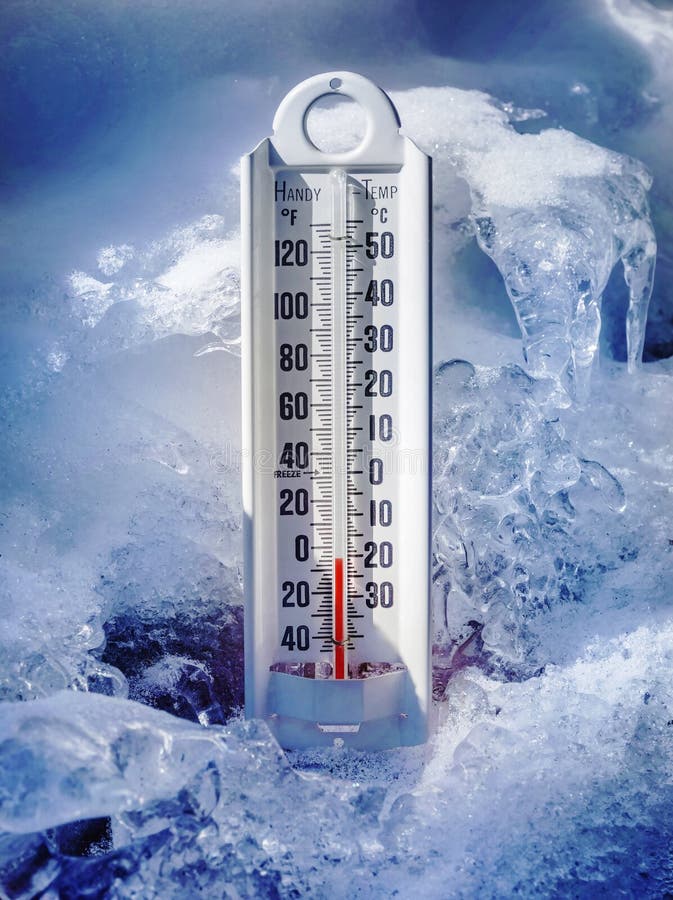
A freeze warning means one thing: temperatures will drop to 32°F or below for at least two hours within the next 24 hours [^78^]. That's it. No snow required. No ice storm. Just cold air moving in and staying long enough to cause real damage.
The National Weather Service issues these alerts specifically during the growing season—the period between spring and fall when plants are active and vulnerable [^75^]. Once a region experiences a widespread freeze that ends the growing season, the NWS stops issuing freeze warnings until the following spring. Think of it as the weather service's way of saying, "Your plants aren't ready for this, and neither is your wallet if you don't act."
In April 2026, parts of New Jersey saw temperatures plunge to 24 degrees—well below the 32-degree threshold—putting early spring daffodils, crocuses, and flowering fruit trees at serious risk [^74^]. The NWS typically begins issuing these alerts around April 11 for that region, but warmer weather had pushed plant growth earlier than usual, prompting earlier warnings [^74^].
Freeze Warning vs. Frost Advisory: Know the Difference
These two alerts sound interchangeable. They are not. Mixing them up can cost you your vegetable garden.
A frost advisory means temperatures will hover between 33°F and 36°F with clear skies and calm winds [^75^]. At these temperatures, frost can form on surfaces even though the air hasn't technically hit freezing. It's the meteorological equivalent of a yellow light—proceed with caution, but don't panic.
A freeze warning means the real deal: 32°F or below for at least two hours [^78^]. This is the red light. At 32 degrees, water inside plant cells begins to crystallize. The ice expands, ruptures cell walls, and turns your hydrangeas into compost overnight [^83^].
| Alert Type | Temperature Range | Duration | Threat Level |
|---|---|---|---|
| Frost Advisory | 33°F - 36°F | Several hours | Moderate; frost possible |
| Freeze Watch | Potential 32°F or below | 24-36 hours out | High; prepare now |
| Freeze Warning | 32°F or below | At least 2 hours | Severe; take action immediately |
| Hard Freeze Warning | 28°F or below | Extended period | Extreme; most plants will die |
Here's where it gets tricky. The NWS measures temperature at about 6 feet above ground—standard thermometer height [^88^]. But on clear, calm nights, the ground level can be significantly colder than the air at 6 feet. So when the forecast says 34 degrees, your garden soil might already be at 30. That gap explains why frost can form even when the "official" temperature stays above freezing [^88^].
NWS Criteria: When and Why They Issue It
The National Weather Service doesn't just wake up and decide to scare gardeners. Freeze warnings follow strict criteria that vary slightly by region [^76^].
For a freeze warning to activate, forecasters must expect:
- Widespread temperatures at or below 32°F
- Duration of at least two consecutive hours
- Occurrence during the locally defined growing season
The "growing season" isn't arbitrary. The NWS defines it based on historical climate data. In the Mid-Atlantic, it typically runs from mid-April through late October [^75^]. In Florida, the growing season extends nearly year-round, which is why freeze warnings there can feel like breaking news in January [^84^].
Freeze watches typically upgrade to warnings 12 to 24 hours before the event [^77^]. The watch gives you a heads-up; the warning means it's happening. Don't wait for the warning to act—by then, you're playing defense with the clock ticking.
The Growing Season Factor: Why Timing Matters
A freeze in January is annoying. A freeze in April is devastating. The difference? The growing season.
Plants have a dormancy period—essentially their winter sleep—where they can survive cold temperatures without damage. Once spring warmth triggers new growth, those same plants lose their cold hardiness. A late-April freeze hits plants when they're most vulnerable: full of fresh, water-rich tissue that freezes and ruptures easily [^74^].
In spring 2026, an unusually warm March pushed plant growth ahead of schedule across the Northeast. When cold air surged south in early April, the NWS issued freeze watches and warnings weeks earlier than the typical April 11 start date [^74^]. Gardeners who had already planted tomatoes and peppers based on the warm weather faced total crop loss.
The NWS tracks this with precision. The growing season officially ends in autumn when minimum temperatures drop to 32°F or below across half or more of a forecast zone for three or more hours [^76^]. Once that happens, freeze warnings stop until spring. It's the weather service's way of acknowledging that after the first killing freeze, everything left outside is either dead or dormant anyway.
How to Protect Your Plants: Expert Strategies That Work
When a freeze warning hits, you have options. Some work better than others, and the method depends on whether you're facing a radiation freeze (clear, calm nights) or an advective freeze (windy, with cold air mass moving in) [^86^].
Cover Your Plants (Best for Radiation Freezes)
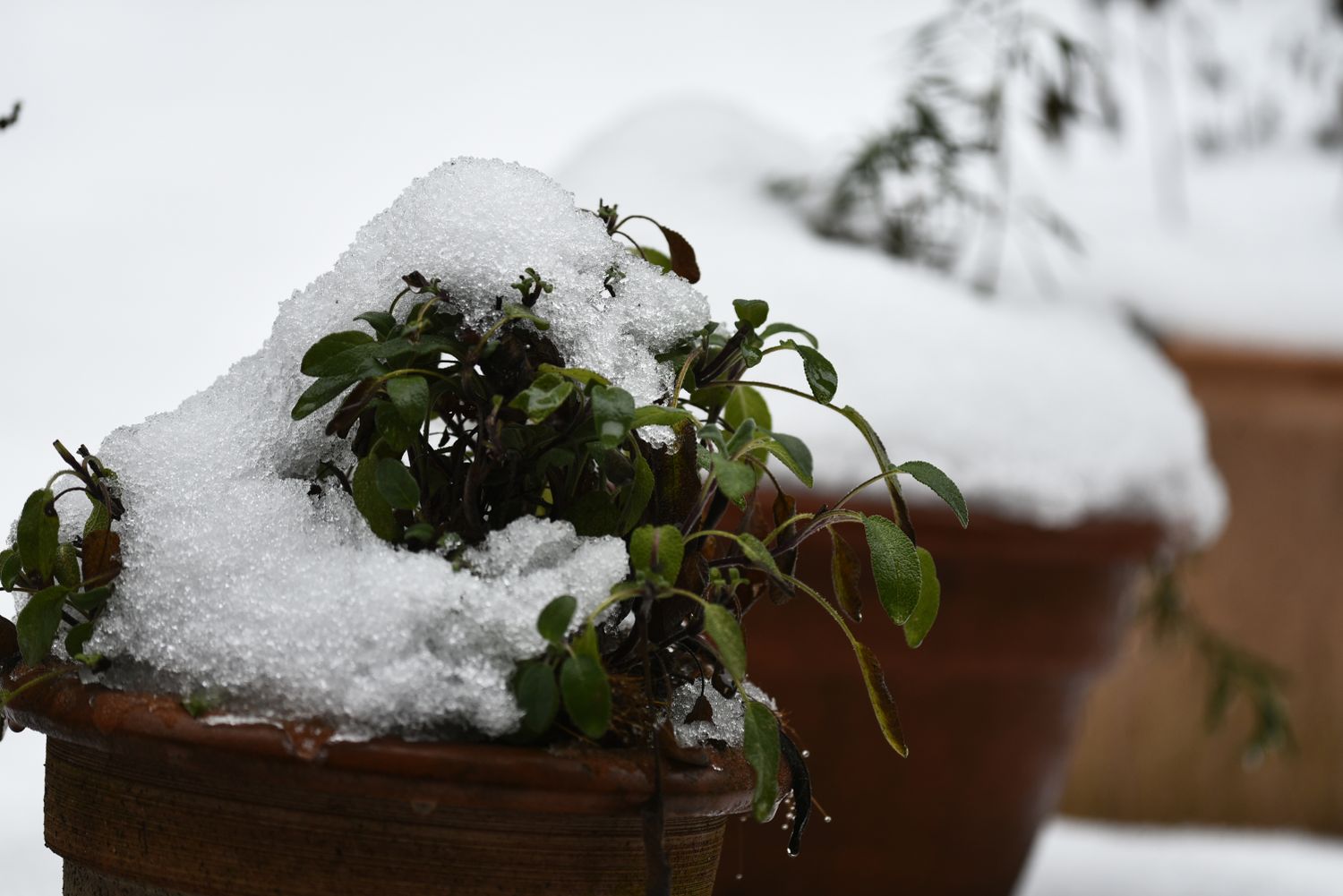
Woven cloth covers provide 2°F to 5°F of protection [^86^]. Use actual frost blankets, burlap, or even old bedsheets. Avoid plastic unless you can prop it above the foliage—plastic touching leaves transfers cold directly and can cause more damage than no cover at all [^81^].
Remove covers the next morning before sunrise. Trapped moisture under cloth can refreeze when sun hits it, creating a mini-greenhouse of ice [^86^].
Water the Soil (Counterintuitive but Effective)
Watering the ground around vulnerable plants the evening before a freeze increases the soil's heat-holding capacity [^86^]. Moist soil retains warmth from the day longer than dry soil. This trick works best for radiation freezes where the ground is your primary heat source.
Move Potted Plants Indoors
This sounds obvious, but timing matters. Move pots to an unheated garage, shed, or covered porch. An unheated garage stays warmer than open air while preventing the temperature shock of bringing tropical plants directly into a 70-degree house [^81^].
Know Your Plant Hardiness
Not all plants are equally doomed. Cool-season vegetables like peas, lettuce, cabbage, and broccoli can handle temperatures down to 26°F [^87^]. Hardy greens like kale and spinach shrug off temperatures in the low 20s. But tomatoes, peppers, cucumbers, and most annual flowers die quickly when temperatures hit the low 30s [^87^].
Protecting Pipes, Pets, and People
Freeze warnings aren't just about plants. The NWS reminds residents to protect the "7 Ps": people, pets, plants, pipes, pools, vehicles, and fire safety [^77^].
Pipes: Water begins solidifying into ice at 32°F. Outdoor hoses should be drained and disconnected. Exposed outdoor plumbing—sprinkler backflow preventers, outdoor faucets—needs insulation or wrapping [^81^]. Indoor pipes along exterior walls benefit from opening cabinet doors to let warm air circulate.
Pets: If it's too cold for you, it's too cold for them. Bring outdoor pets inside during freeze warnings. Short-haired breeds are especially vulnerable to hypothermia at temperatures that barely register as uncomfortable to humans.
People: Florida's data tells a sobering story. From 1979 to 1999, 124 people died from cold exposure in Florida alone—not counting house fires started by space heaters [^84^]. Brief cold snaps kill because people underestimate the risk in normally warm climates. Check on elderly neighbors and anyone without adequate heating.
Vehicles: Keep your gas tank at least half full during cold weather advisories. Condensation in near-empty tanks can freeze fuel lines. If you park outside, consider a battery tender for older vehicles—cold reduces cranking power by up to 60%.
Frequently Asked Questions
The National Weather Service issues a freeze warning when temperatures are forecast to drop to 32°F or below for at least two hours within the next 24 hours [^78^].
A frost advisory means temperatures between 33°F and 36°F with frost possible. A freeze warning means 32°F or below, which kills most sensitive plants [^75^][^79^].
Yes. Frost can form at temperatures up to 36°F because ground-level surfaces cool faster than air at thermometer height (6 feet). Clear skies and calm winds promote this radiation cooling [^88^].
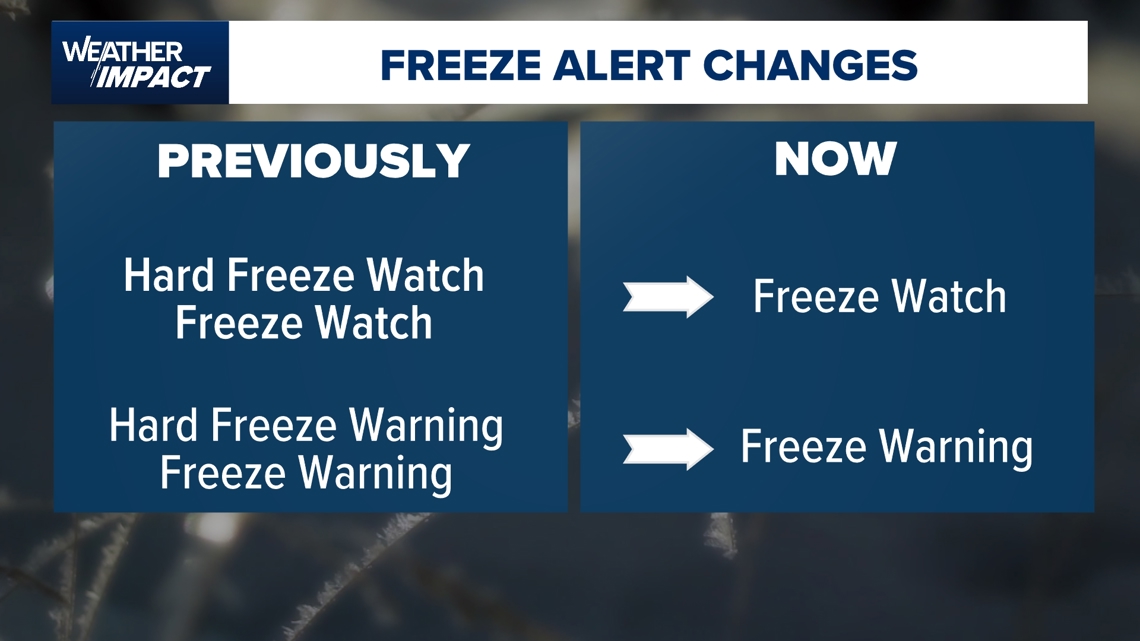
A hard freeze occurs when temperatures drop to 28°F or below for an extended period. Most commercial crops and residential plants cannot survive this [^83^]. The NWS no longer issues separate "Hard Freeze Warnings" as of 2024; these events are now covered under the standard Freeze Warning [^77^].
Cover plants with woven cloth (not plastic), water the soil around them the evening before, and move potted plants to an unheated garage or indoors. Remove covers in the morning before sunlight hits them [^81^][^86^].
The NWS stops issuing freeze warnings after a widespread killing freeze ends the growing season—typically when temperatures hit 32°F across half or more of a forecast zone for three or more hours [^76^].
Related Reading
For more insights on weather preparedness and how to read meteorological signals, explore our coverage of climate patterns and seasonal planning over at MindUnplug. Understanding weather alerts helps you make smarter decisions about everything from gardening to travel.
Sign up for NWS alerts in your county, download a reliable weather app with push notifications, and keep frost blankets handy from March through November. The best defense against a freeze warning is preparation—and now you know exactly what to prepare for.
Last Updated: April 19, 2026
Sources: National Weather Service | NWS Raleigh Weather Criteria | NWS Cold Weather Safety | Yahoo News | Asbury Park Press | Philly Burbs | Old Farmer's Almanac


