
World Quantum Day 2025: Celebrating 100 Years of Quantum Science & Technology
Why April 14 Marks the Biggest Milestone in Modern Physics History

Quantum computing visualization — where particles exist in multiple states simultaneously. Image: Adobe Stock
Why April 14? The Math Behind the Date
Ever wonder why scientists picked April 14? It is not random. The date 4.14 represents the rounded first three digits of Planck's constant: 4.1356677×10⁻¹⁵ eV·s. This tiny number governs how energy works at the quantum level. [^11^]
Max Planck introduced this constant in 1900. It became the foundation of quantum theory. Without Planck's constant, we would not understand how atoms behave, how light interacts with matter, or why your smartphone works. Yes, quantum mechanics literally powers the device in your pocket right now.
A Century of Quantum: From Theory to Everyday Tech
Quantum mechanics turns 100 years old in 2025. That is not just a birthday party for physicists. This century of discovery gave us technologies we take for granted:
- Semiconductors: The reason your laptop, phone, and TV exist [^7^]
- Lasers: Everything from barcode scanners to eye surgery
- MRI machines: Medical imaging that saves millions of lives
- LED lights: Energy-efficient lighting in every modern home
- GPS navigation: Precision timing using quantum atomic clocks
Here is the kicker: quantum mechanics started as abstract theory. Physicists debated if it was even real. Today, it generates trillions in economic value. Not bad for a theory about invisible particles.

Modern quantum processors represent the next leap in computing power. Image: iStock
World Quantum Day 2025: Global Events You Can Join
This year, the celebration spans continents. The official World Quantum Day website lists events in over 60 countries. [^2^] Here are highlights:
- London, UK: Quantum Day Celebration at Imperial College featuring exhibitions, talks, and a "Silent Quantum Disco" [^8^]
- Twente, Netherlands: Full-day program with keynote lectures and the official opening of the House of Quantum Twente [^5^]
- Nottingham, UK: "Cosmic Titans: Art, Science and the Quantum Universe" exhibition running through April 27 [^3^]
- Saudi Arabia: "Discovering Quantum Possibilities" high-level forum [^10^]
- USA: Quantum.Tech USA industry summit bringing together researchers and investors
The US Senate officially recognized World Quantum Day on May 2, 2023, passing a resolution supporting the initiative. [^11^] This bipartisan backing shows quantum science matters for national competitiveness.
Real-World Quantum Applications: Beyond the Lab
Quantum technology is not future fiction. It is solving problems today. Let us look at proven applications making an impact right now:
1. Drug Discovery and Healthcare
ProteinQure, a Toronto-based biotech startup, partners with IBM, Microsoft, and AstraZeneca to model protein behavior using quantum computers. [^1^] Why does this matter? Modeling a single penicillin molecule would require a classical computer with 10⁸⁶ bits — more atoms than exist in the observable universe. Quantum computers handle this complexity naturally.
2. Financial Modeling
JPMorgan Chase works with IBM's Q Network to develop quantum algorithms for option pricing and risk analysis. [^1^] The Monte Carlo simulations that banks run daily — calculating probabilities for thousands of scenarios — could run exponentially faster on quantum systems.
3. Traffic Optimization
Volkswagen partnered with D-Wave to optimize bus routes in Lisbon, Barcelona, and Beijing. [^1^] Quantum algorithms analyzed real-time traffic patterns, reducing congestion and wait times. This is not theoretical — buses actually followed quantum-optimized routes through city streets.
4. Cybersecurity
BT and Toshiba deployed the world's first commercial quantum-secured communications network in London. [^13^] It connects Canary Wharf financial centers to the West End using quantum key distribution (QKD). Any eavesdropping attempt immediately alerts the system.
5. Wearable Brain Scanners
The University of Nottingham developed a wearable quantum brain scanner using lightweight sensors. [^13^] Unlike room-sized traditional MEG machines, this device fits on any head size while patients move freely. It is currently used at Toronto's Hospital for Sick Children to study childhood epilepsy and autism.
According to McKinsey research, the quantum market could reach $97 billion by 2035 and approach $200 billion by 2040. [^12^]
Source: McKinsey Quantum Technology Report
The NISQ Era: Where We Stand Today
We are currently in the NISQ era — Noisy, Intermediate-Scale Quantum. [^6^] Today's processors contain hundreds to a thousand qubits. They are not yet fault-tolerant, but they are improving rapidly.
Microsoft's Majorana 1 chip, announced in 2025, uses topological qubits that store information across multiple quantum states. [^1^] This approach reduces errors that plague current systems. Google's Willow processor pushes error correction boundaries further.
Here is the reality check: quantum computers will not replace your laptop. They solve specific problems classical computers cannot touch. Think of them as specialized tools, not general-purpose machines.
Learn the fundamentals of quantum computing with 3Blue1Brown's visual explanation of Grover's Algorithm
Limitations and Challenges: The Honest Truth
Quantum computing faces real obstacles. Understanding these limitations builds trust with readers:
- Error rates: Current qubits are fragile. Environmental interference causes errors. Error correction requires millions of physical qubits for every logical qubit.
- Extreme cooling: Most quantum processors operate near absolute zero (-273°C), requiring complex infrastructure.
- Specialized use cases: Quantum advantage only appears for specific problems. Your email will not load faster on a quantum computer.
- Timeline uncertainty: Predictions about "quantum supremacy" vary wildly. Some applications remain decades away.
As theoretical computer scientist Scott Aaronson notes, the quantum computers that threaten current encryption "won't exist for quite a while." [^1^] The National Institute of Standards and Technology (NIST) is already standardizing post-quantum cryptographic algorithms to prepare for that future.
Why World Quantum Day Matters for Everyone
Quantum science addresses challenges outlined in the UN's 2030 Sustainable Development Goals. [^14^] These include:
- Climate change mitigation through better battery technology
- Clean energy optimization using quantum algorithms
- Food security through improved agricultural modeling
- Clean water access via advanced filtration simulations
Rosario Fazio, physicist and co-chair of the International Year of Quantum steering committee, describes quantum mechanics simply: "It is the theoretical framework we use to describe the microscopic world. It follows rules fundamentally different from classical physics." [^14^]
Those rules — superposition, entanglement, wave-particle duality — sound exotic. But they are as real as gravity. And they are reshaping our technological future.
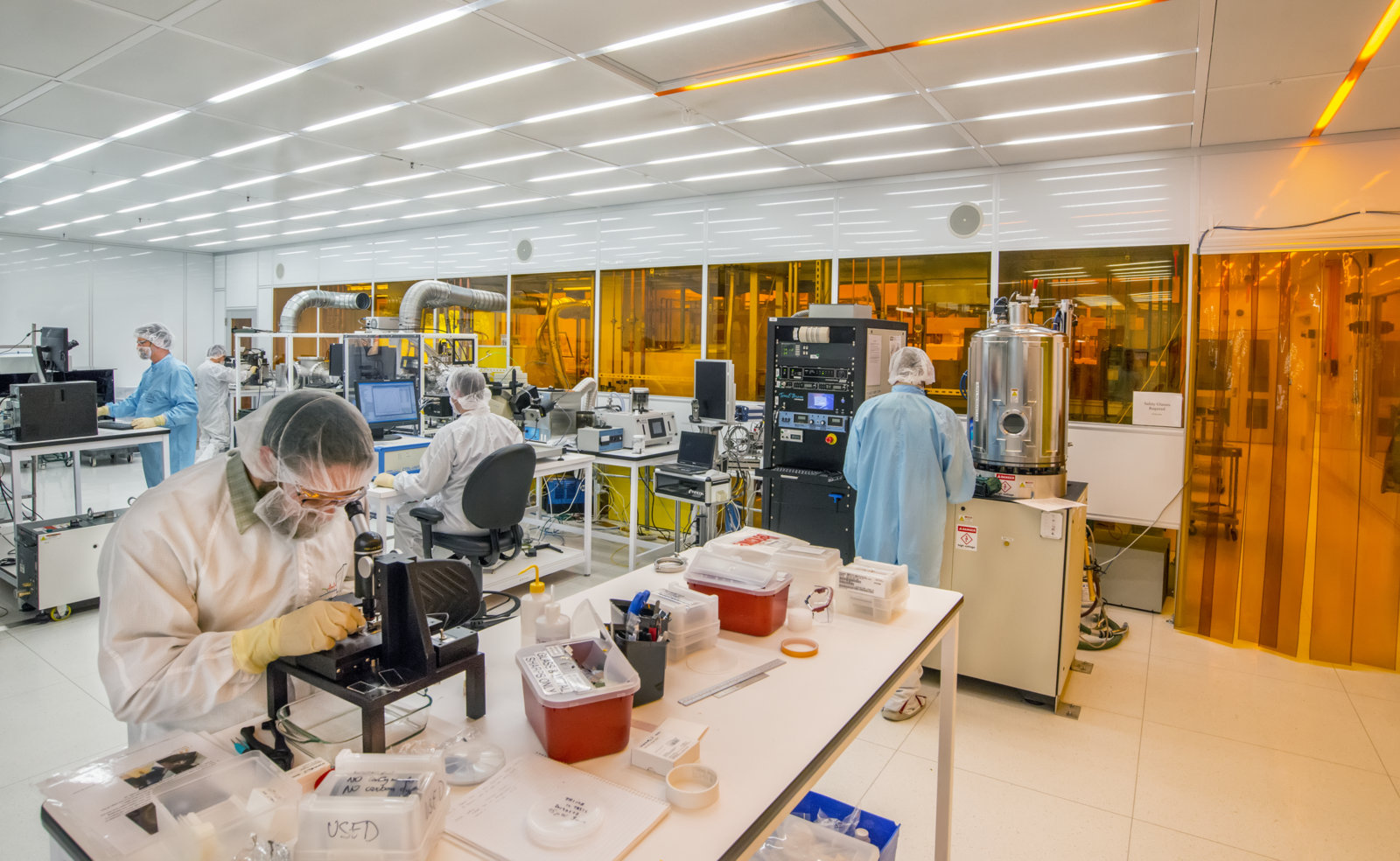
Researchers at Berkeley Lab advancing quantum information science. Image: Lawrence Berkeley National Laboratory
How to Participate in World Quantum Day 2025
You do not need a PhD to join the celebration. Here is how anyone can engage:
- Attend local events: Check worldquantumday.org for happenings near you
- Visit science museums: Many host quantum exhibitions during April
- Watch educational content: The video above explains quantum computing fundamentals
- Follow #WorldQuantumDay: Social media shares breakthroughs and explanations
- Learn quantum basics: Free resources exist at quantum.country and IBM's Qiskit platform
Frequently Asked Questions About World Quantum Day
World Quantum Day is an international celebration held annually on April 14 to promote public awareness and understanding of quantum science and technology. It started in 2021 as an initiative by international scientists and engineers. [^11^]
2025 marks the 100th anniversary of quantum mechanics and is designated by the United Nations as the International Year of Quantum Science and Technology. The US Senate passed a resolution supporting the celebration. [^2^][^11^]
4.14 represents the rounded first three digits of Planck's constant (4.1356677×10⁻¹⁵ eV·s), the fundamental constant governing quantum physics and energy quantization. [^11^]
Yes. Quantum technologies already include MRI machines, semiconductors, lasers, LED lights, GPS atomic clocks, and early quantum computers used for drug discovery and financial modeling. [^7^][^13^]
Not yet. Current quantum devices are too error-prone to crack modern encryption. However, NIST is developing post-quantum cryptographic standards to prepare for future quantum computers. [^1^]
Start with educational YouTube channels like 3Blue1Brown or Science ABC, visit IBM's Qiskit platform for hands-on learning, or check local universities for World Quantum Day events. [^16^][^17^]
Join the Quantum Revolution
World Quantum Day 2025 is your invitation to explore the science shaping tomorrow. Whether you are a student, professional, or curious mind, quantum science affects your future.
Visit worldquantumday.org to find events near you and be part of the century-long legacy of quantum discovery.
Key Takeaways
- World Quantum Day occurs every April 14, representing Planck's constant (4.14)
- 2025 celebrates 100 years of quantum mechanics and the UN International Year of Quantum Science
- Quantum technology is already here: MRI machines, semiconductors, lasers, and secure communications
- Real applications include drug discovery, financial modeling, traffic optimization, and climate research
- The quantum market could reach $97 billion by 2035
- Current quantum computers are specialized tools, not general-purpose replacements for classical computers
Last Updated: April 14, 2025 | Sources: UNESCO, CERN, IPPOG, Wikipedia, UK National Quantum Technologies Programme, McKinsey, IBM, Google Quantum AI


